

Reconceptualising General Intelligence (IQ) Beyond the G Factor
Shifting landscapes in intelligence theory

For over a century, psychologists and researchers have adopted the idea that human intelligence is anchored in a single, overarching cognitive ability - often referred to as the g factor. This ‘general intelligence’ is thought to represent an individual’s capacity for reasoning, problem-solving, and understanding, and it has been the bedrock of intelligence testing since its introduction by Charles Spearman in the early 20th century. The g factor’s dominance has fostered the perception that intelligence is both fixed and unitary, with little room for meaningful change or augmentation. The clinical psychologist Jordan Peterson reflects this view of intelligence.
But what if intelligence isn’t just one thing? What if it’s more like a complex ecosystem - dynamic, interactive, and trainable? Recent advances in cognitive neuroscience and psychometric theory suggest exactly that.
Moving Beyond a Static g Factor
Traditional intelligence theories treat g as a statistical construct—a kind of cognitive "common denominator." While it’s undeniably useful for predicting academic and professional success, it has significant limitations. It oversimplifies the intricate tapestry of human cognition and implies a certain biological determinism: you’re either born smart, or you’re not.
Emerging research, however, paints a more complex picture. Modern psychometric models, such as the Cattell-Horn-Carroll (CHC) theory, break intelligence into a broader array of abilities, from fluid reasoning (Gf) and crystallised knowledge (Gc) to working memory (Gwm) and processing speed. Meanwhile, psychometric network models propose that intelligence arises not from a single latent factor but from dynamic interactions between specific cognitive skills. These approaches highlight the possibility of targeting and improving individual cognitive components - a potential that the g-centric view largely ignores.
Why Should We Care?
Why does this shift in thinking matter? Because it opens up the exciting possibility of augmenting general intelligence. If intelligence isn’t static - if it’s shaped by how we train and interact with our environment - then we can design methods to enhance it.
Reconceptualising intelligence isn’t just an academic exercise - it has real-world implications. Whether you're a student seeking to excel academically, a professional navigating complex decisions, or simply someone striving for personal growth, this new understanding offers practical tools to expand your cognitive capacity and performance.
In the sections that follow, we will go deeper into the Trident G theory and the Tri-SCI method, exploring how they empower us to augment our cognitive abilities and augment our intelligence.
The Problem with the G Factor
The concept of general intelligence, or the g factor, has been a cornerstone of psychometric research for over a century. First proposed by Charles Spearman in 1904, the g factor was envisioned as the core cognitive ability underlying performance across diverse mental tasks—the so-called ‘positive manifold’ [1]. It provided a simple, elegant explanation for why some people consistently perform better than others in tests of reasoning, memory, and problem-solving. However, simplicity can sometimes be misleading.
The Shadow of Biological Determinism
The g factor’s popularity is partly rooted in its promise of clarity: a single, overarching measure that could rank cognitive ability. Unfortunately, this simplicity has contributed to the perception of intelligence as biologically determined and largely immutable. For many, like Jordan Peterson, the g factor has become synonymous with a “fixed ceiling” on human potential, suggesting that genetic endowment plays a dominant role and that interventions to enhance cognitive abilities might be futile [2] [3].
This deterministic view is not only limiting but also misaligned with modern neuroscience, which reveals the brain’s incredible plasticity and networked nature [4]. Emerging evidence reveals that intelligence is not a fixed trait but a dynamic interplay of multiple cognitive processes that can be shaped by experience, training, and environmental factors [5].
Over-Reliance on Statistical Constructs
Another issue with g-centric models is their heavy reliance on statistical abstraction. The g factor is, in essence, a statistical artifact derived from factor analysis - a method that identifies common variance across a set of cognitive tasks [6]. While this approach captures useful correlations, it offers limited insights into the underlying mechanisms of intelligence.
Put simply, g tells us that cognitive abilities are interrelated but not how they interact or how we might improve them. It’s like measuring the ‘average speed’ of a car without understanding how the engine works. As a result, g-centric models offer little actionable guidance for educators, psychologists, or individuals aiming to enhance cognitive performance [7].
Theoretical and Psychometric Conflation
Compounding these issues is the conflation of theoretical g and psychometric g. Theoretical g is a construct - a proposed explanation of cognitive performance. Psychometric g, on the other hand, is a statistical output for population test scores. Over time, these two ideas have become entangled, leading to a form of theoretical rigidity. Researchers often treat psychometric g as if it were a concrete biological entity - some characteristic of individual brains - rather than a model-dependent, population level, abstraction [8] [9].
Mutualism, Process Overlap and Network Theories: A New Landscape
This rigidity has stifled innovation. By focusing narrowly on psychometric g, researchers have overlooked alternative frameworks that could better account for the complexity of intelligence. For example, dynamic mutualism models propose that cognitive abilities develop through reciprocal interactions over time, challenging the notion of a singular, underlying g factor [10, 13]. Similarly, process overlap theory highlights the shared neural and cognitive processes that drive performance across tasks, offering a more nuanced perspective on general intelligence [11].
Trident G and Tri-SCI Brain Training Framwork
This is where the Trident G theory and its applied intervention framwork, the Tri-SCI method, come into play. At its core, the Trident G theory redefines intelligence as an interplay between three modes: executive control (left fork of trident), creative exploration (right fork of trident), and fluid-crystallised integration (shaft of trident).
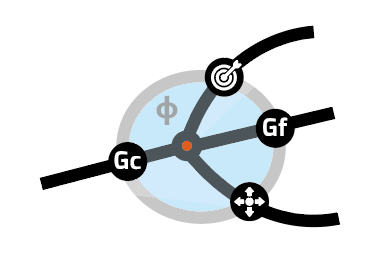
Unlike the static g factor, this dynamic framework is built on the mutualism / network theories, embracing the principle that intelligence is multidimensional, networked, adaptive and neuroplastic. The Tri-SCI method combines working memory training, strategy development, and mindfulness ‘in the zone’ practices to foster real, measurable cognitive performance gains.
For a deeper dive into this brain training framework, see these Substack aricles:
The Central Role of Working Memory and Attention
At the core of contemporary intelligence theories lies the working memory–attentional control (Gwm-AC) complex, which is pivotal for understanding and improving cognitive processes [13]. This framework, emphasised in psychometric network models and the CHC theory, underlines the significance of attentional control capabilities such as selective attention, divided attention and sustained focus. These capabilities are directly tied to cognitive efficiency and higher-order functions like fluid intelligence (Gf). [12]
Emerging models highlight that strengthening the Gwm-AC complex may have far-reaching implications for cognitive enhancement. The emphasis on dynamic, non-g-centric training aligns with process overlap theory and dynamic mutualism, which advocate for a distributed network-based understanding of intelligence. This shift from static IQ measures to adaptive frameworks offers actionable pathways for augmenting general intelligence across educational, professional, and personal domains.
Implications for Intelligence Research and Training
The shift from a fixed g factor to a dynamic network model has profound implications for education, professional development, and cognitive research. Traditional IQ tests fail to capture the dynamic nature of intelligence and its potential for growth. Adaptive frameworks like Tri-SCI provide a more explanatory and actionable understanding of cognitive capabilities, empowering individuals and organisations to unlock untapped potential.
By targeting the interplay between executive control, creative exploration, and fluid-crystallised integration, these interventions align with real-world demands, focusing on flexibility, adaptability, and innovation.
Applications Across Domains
Education: Enhancing problem-solving, learning strategies, and academic performance.
Professional Development: Supporting strategic decision-making, innovation, and resilience.
Personal Growth: Promoting adaptability and mindfulness in everyday life.
Conclusion
The reconceptualisation of intelligence as multidimensional, adaptive & plastic is more than a contemporary theoretical shift - it’s a practical ‘revolution’. Frameworks like Trident G theory and the Tri-SCI method are designed to offer actionable pathways to augment general intelligence, equipping individuals to thrive in an increasingly complex world.
As cognitive neuroscience evolves, we now have the tools to transcend static IQ models and cultivate intelligence dynamically. By embracing these methods, we unlock the potential to adapt, innovate, and excel in a rapidly evolving world.
References
Spearman, C. (1904). "General intelligence," objectively determined and measured. The American Journal of Psychology, 15(2), 201–293.
Herrnstein, R. J., & Murray, C. (1994). The bell curve: Intelligence and class structure in American life. Free Press.
Ashton Smith, M. (2018). Jordan Peterson and IQ: Intelligence research, myths, and practical advice. IQ Mindware. Retrieved December 25, 2024, from https://www.iqmindware.com/trident-brain-training/intelligence-research/jordan-peterson-iq/.
Pascual-Leone, A., Amedi, A., Fregni, F., & Merabet, L. B. (2005). The plastic human brain cortex. Annual Review of Neuroscience, 28, 377–401.
Klingberg, T. (2010). The overflowing brain: Information overload and the limits of working memory. Oxford University Press.
Jensen, A. R. (1998). The g Factor: The Science of Mental Ability. Praeger.
McGrew, K. S. (2009). CHC theory and the human cognitive abilities project: Standing on the shoulders of the giants of psychometric intelligence research. Intelligence, 37(1), 1–10.
Kovacs, K., & Conway, A. R. A. (2019). Process overlap theory: A unified account of the general factor of intelligence. Psychological Inquiry, 30(4), 259–274.
van der Maas, H. L., et al. (2006). A dynamical model of general intelligence: The positive manifold of intelligence by mutualism. Psychological Review, 113(4), 842–861.
Kovacs, K., & Conway, A. R. A. (2019). What Is IQ? Life Beyond “General Intelligence”. Current Directions in Psychological Science, 28(2), 189-194.
Pascual-Leone, A., Amedi, A., Fregni, F., & Merabet, L. B. (2005). The plastic human brain cortex. Annual Review of Neuroscience, 28, 377–401.
McGrew, K. S., Schneider, W. J., Decker, S. L., & Bulut, O. (2023). A Psychometric Network Analysis of CHC Intelligence Measures: Implications for Research, Theory, and Interpretation of Broad CHC Scores “Beyond g”. Journal of Intelligence, 11(1), 19.
Van Der Maas, H. L. J., Kan, K. -J., Marsman, M., & Stevenson, C. E. (2017). Network Models for Cognitive Development and Intelligence. Journal of Intelligence, 5(2), 16. https://doi.org/10.3390/jintelligence5020016
Appendix 1: In Depth Research Article
A recent article on the ‘state of play’ of intelligence research for those of you who want a deep dive on shifting perspectives on the nature of intelligence is this one: [12]


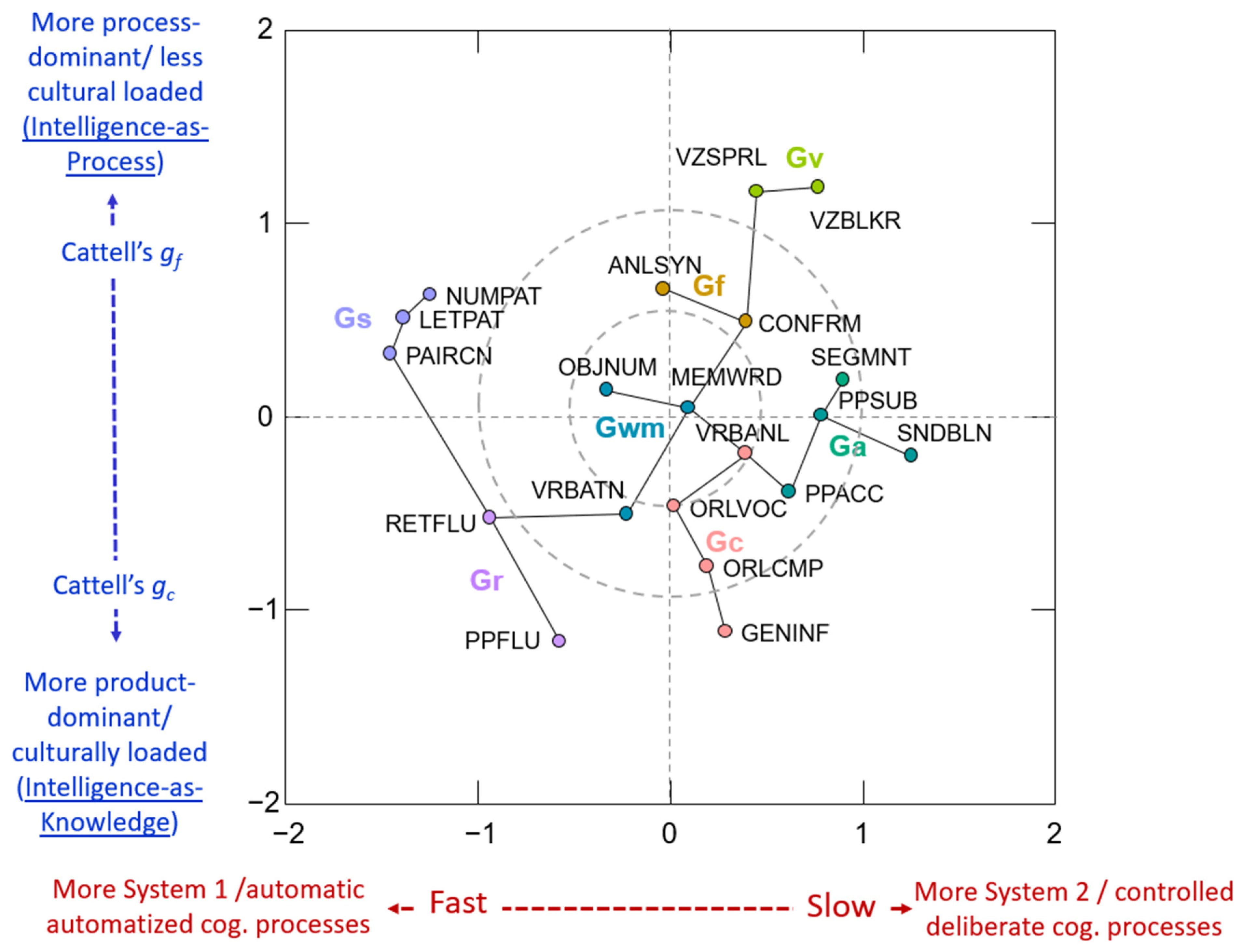
Trident G theory aligns well with the Psychometric Network Analysis (PNA) theory in this article in the following ways:
1. PNA’s Core Contribution: Intelligence as a Network
PNA Framework: The Psychometric Network Analysis (PNA) approach conceptualises intelligence as an emergent property of dynamic interactions among cognitive abilities, rather than being dominated by a singular latent variable like g. By mapping relationships between CHC abilities, PNA identifies central nodes (e.g., working memory–attentional control, Gwm-AC) and reveals intelligence as a network of interdependent processes.
Trident G Theory Alignment: Trident G similarly treats intelligence as the outcome of dynamic coordination among modes (creative, control, and fluid-crystallised integration). These modes align with the PNA framework’s depiction of intelligence as a distributed, interconnected system, where cognitive abilities interact adaptively.
2. Working Memory–Attentional Control (Gwm-AC) as a Central Node
PNA Insight: The article emphasises Gwm-AC as a central node in the network, facilitating both higher-order processes like fluid intelligence (Gf) and general cognitive efficiency. This aligns with the CHC model’s emphasis on working memory as critical for integrating and coordinating cognitive tasks.
Trident G’s View: Trident G incorporates Gwm-AC as foundational for both the control mode (constraint-based problem-solving) and the creative mode (exploratory thinking). The Tri-SCI method operationalises this insight by including working memory training (e.g., adaptive dual n-back) to strengthen Gwm-AC and promote far transfer.
3. Process vs Product
Process = Capacity:
"Process" in the PNA framework aligns with capacity-based processing in Trident G theory. This refers to fundamental cognitive resources like working memory, attentional control, and other mechanisms that underpin dynamic cognitive operations.
Example: The ability to hold multiple pieces of information in working memory while solving a problem.
Product = Strategy:
"Product" aligns with strategy-based processing in Trident G theory. This refers to procedural knowledge or specific approaches to problem-solving and decision-making that are applied to achieve outcomes.
Example: Applying a known heuristic to solve a familiar type of problem or making a decision based on accumulated expertise.
4. Fast vs Slow Processing
Fast = Gc:
Fast, automated processes correspond to crystallised intelligence (Gc) in Trident G theory. These are efficient, routine, low-effort operations based on stored knowledge or automatised skills.
Example: Quickly recognising a word or recalling a fact from long-term memory.
Slow = Gf:
Slow, effortful processes correspond to fluid intelligence (Gf) in Trident G theory. These involve deliberate reasoning, problem-solving, and adapting to novel situations, requiring controlled and high-energy processing.
Example: Analysing an unfamiliar problem or generating creative solutions to a complex issue.
5. Spatial Coding in the Tri-SCI Method and its Correspondence to the PNA Model
Spatial coding is a core component of the Tri-SCI (Trident Strategy-Capacity Intervention) method within the Trident G theory, particularly in its ability to facilitate far transfer. Here’s a detailed analysis of its role and how it aligns with the PNA framework:
1. The Role of Spatial Coding in the Tri-SCI Method
Spatial coding involves leveraging visual-spatial representations like concept maps, Venn diagrams, and influence diagrams to enhance problem-solving and generalisation. Its importance is underscored in Trident G theory for several reasons:
Representational Support: Spatial coding enables individuals to visually encode relationships and structures in a problem. This externalises complex relational information, freeing cognitive resources like working memory.
Cognitive Offloading: By mapping abstract or complex relationships visually, spatial coding reduces the demands on internal processing, allowing for deeper relational reasoning and evidence accumulation.
Far Transfer: The use of spatial frameworks facilitates the generalisation of reasoning strategies across domains. For example, learning to use concept maps for academic problem-solving can transfer to professional contexts involving strategic planning or decision-making.
2. Correspondence to the PNA Framework
Spatial coding aligns with the principles of the PNA model in several key ways:
A. Centrality of Gwm-AC in Spatial Coding
PNA Insight: Working memory–attentional control (Gwm-AC) is identified as a central node in the cognitive network, crucial for integrating information and facilitating higher-order processes like Gf.
Tri-SCI Alignment: Spatial coding depends heavily on Gwm-AC to hold, manipulate, and integrate visual-spatial representations. This highlights its role in bridging Gf (fluid intelligence processes) with Gc (stored knowledge) in novel contexts.
B. Supporting Both Process and Product Dimensions
PNA Framework: In the PNA framework, processes (capacity) and products (strategies) are distinct but interconnected:
Capacity: Spatial coding enhances processing by reducing cognitive load and enabling more efficient use of working memory and attentional control.
Strategy: Spatial coding supports systematic reasoning and decision-making through structured frameworks (e.g., diagrams).
Example: A decision tree is a spatial coding strategy that enables controlled reasoning (process) while providing actionable solutions (product).
C. Far Transfer via Network Cohesion
PNA Insight: The PNA model highlights the cohesion of the cognitive network as a key predictor of generalisation.
Tri-SCI Alignment: Spatial coding promotes cohesion by explicitly linking disparate ideas or variables in a single visual framework. This enhances far transfer by providing learners with a transferable method to structure reasoning across domains, akin to strengthening the ‘edges’ between nodes in the PNA network.
3. Gf-Gc and Fast-Slow Dimensions in Spatial Coding
Spatial coding bridges the Gf-Gc and fast-slow processing distinctions:
Slow Processes (Gf): The deliberate construction and analysis of spatial diagrams (e.g., mapping variables or systems) require effortful relational reasoning and attentional control.
Fast Processes (Gc): Once spatial frameworks become familiar, their application becomes automatised, shifting to faster, crystallised processing.
Example: Learning to use influence diagrams for decision-making starts as a Gf-dominated task (slow, effortful) but can become a Gc-dominated task (fast, efficient) with repeated practice.
4. Practical Implications for Intelligence Training
The centrality of spatial coding in Tri-SCI extends to its practical applications for enhancing intelligence:
Strengthening Gwm-AC: Spatial coding tasks require learners to manage and manipulate complex visual-spatial representations, reinforcing working memory and attentional control.
Fostering Relational Reasoning: It enhances fluid intelligence development (Gf) by promoting deeper reasoning and evidence accumulation.
Automating Problem-Solving: Structured approaches to problem-solving become consolidated into crystallised knowledge (Gc) through repeated practice.
Conclusion
The integration of the Trident G theory and the PNA framework provides a powerful lens for understanding intelligence as an interconnected, dynamic system. Both models emphasise the centrality of working memory–attentional control (Gwm-AC) in mediating cognitive processes, with Trident G further operationalising these insights through the Tri-SCI method. Spatial coding, a cornerstone of Tri-SCI, mirrors the PNA framework’s emphasis on network cohesion by visually representing and strengthening the relationships between cognitive abilities. This shared focus on dynamic interactions, process-product distinctions, and the Gf-Gc continuum underscores the compatibility of the two theories. Together, they offer a comprehensive and practical framework for enhancing intelligence through targeted training, leveraging spatial coding and other strategies to promote far transfer and cognitive flexibility across domains.
Tucker-Drob and colleagues demonstrated that general intelligence (g) has a genetic basis, showing that it is not merely a statistical artifact. Their findings are detailed in the study titled "Genetic 'General Intelligence,' Objectively Determined and Measured," - https://www.biorxiv.org/content/10.1101/766600v3.full
James Lee (behavioral geneticist):
Roderick McDonald criticized the naming fallacy. Just saying that all correlated scores on a test are caused by a common factor is circular reasoning.
Instead, it is a much more important scientific discovery to identify an outside variable that causes observed scores to correlate.
An alternative to the factor model is the network model. It claims that there is no "mental property" that can be affected in a manner propagated to all of its observable indicators. These connections or "bonds" were hypothetical in the early 20th century. Today, they could be considered being genes that are inherited together, or brain regions that are connected.
In the factor model, if a SNP has a causal impact on a trait, then its relationship with observed scores are in proportional to the effect of the SNP, multiplied by the factor loading.
In contrast, network models make no prediction like that. There is no particular expected relationship among SNP effect, observed scores, and factor loadings.
We re-analyzed GWAS data to test these competing theories. "We found a very large number of SNPs whose pattern of associations with items matched the factor models. . . . We had a lot of SNPs that had effects that were almost exactly as predicted."
(Everything Lee is saying is in relation to personality traits, especially neuroticism.)
It is reasonable to expect these results to apply to intelligence because factor models tend to fit better with intelligence data than personality data. A study from de la Fuente et al. (2021) indicates that this may be so, but there is caution because there may be some ascertainment bias in that study.
So, what kind of thing is a psychological trait? The question remains open. But the common factors of factor analysis are real things that are subjected to physical causes of genetics and the brain